If your car has broken down or been in an accident, the type of tow truck sent to you matters more than most drivers realise. Choosing the wrong method can cause transmission damage, scratch your bodywork, or even void your manufacturer’s warranty. This guide, written by our experienced UK recovery team, explains exactly when flatbed towing is the right call — and when wheel lift towing is perfectly fine.
What Is the Difference Between Flatbed and Wheel Lift Towing?
Before deciding which method is right for your situation, it helps to understand how each one works.
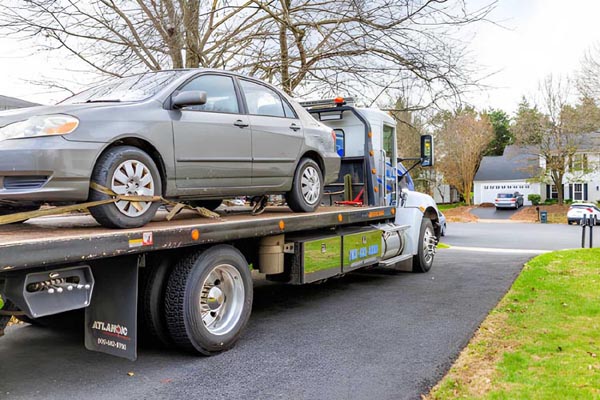
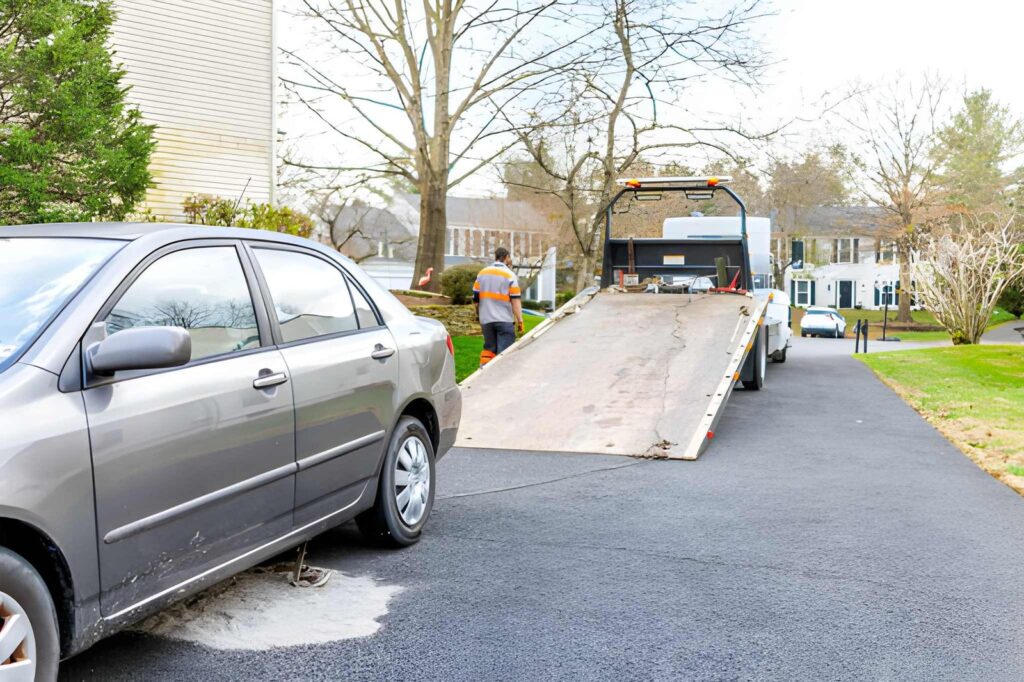
Flatbed towing (also called flatbed recovery) involves loading your entire vehicle onto a flat, level platform that is hydraulically tilted to ground level. All four wheels leave the ground simultaneously, and the car is transported completely off the road surface. This is the safest and most damage-free method available.
Wheel lift towing uses a metal yoke that hooks under the front or rear wheels, lifting one end of the vehicle while the opposite two wheels remain in contact with the road. It is faster to set up and better suited to short-distance, straightforward recoveries.
Quick Comparison Table
| Factor | Flatbed Recovery | Wheel Lift Towing |
| All wheels off ground | Yes – fully loaded | No – 2 wheels on road |
| Risk of drivetrain damage | Very Low | Higher – esp. AWD/4WD |
| Suitable for accident damage | Ideal | Not recommended |
| Low-clearance / sports cars | Yes | Often not suitable |
| Best for long distance | Yes – always preferred | Short distance only |
| EV / Hybrid / AWD safe | Yes | No – avoid |
| Classic / luxury vehicles | Preferred | Not recommended |
| Setup speed | Slightly longer | Faster |
When You Should Always Use a Flatbed Tow Truck
There are clear situations where flatbed recovery is not just preferable – it is essential:
1. Accident & Collision Damage
If your vehicle has been involved in a road accident and has structural, suspension, wheel, or undercarriage damage, wheel lift towing could cause further harm. A flatbed keeps all damaged components stationary during transport and is the only responsible choice after a collision.
2. AWD, 4WD & Electric Vehicles
All-wheel drive, four-wheel drive, and electric vehicles must have all wheels off the ground during any towing operation. Wheel lift towing on these vehicles can destroy the drivetrain or regenerative braking systems – an extremely costly mistake.
| Expert Warning – EV & AWD Owners Most EV manufacturers – including Tesla, BMW i-Series, Jaguar, and Nissan – explicitly state in their vehicle handbooks that the car must be transported on a flatbed at all times. Always check your owner manual before allowing wheel lift towing. |
3. Low-Slung, Sports & Luxury Cars
Performance cars, supercars, and prestige vehicles have very low ground clearance and delicate aerodynamic undersides. A flatbed eliminates the risk of bumper scraping, diffuser damage, or spoiler contact during loading and unloading.
4. Classic & Vintage Vehicles
Irreplaceable or high-value classic cars require the utmost care. Flatbed recovery prevents contact with road debris, avoids stress on ageing drivetrains, and keeps the vehicle fully static throughout the journey.
5. Locked Wheels or Seized Brakes
If your vehicle wheels are locked due to a mechanical failure, steering fault, or brake seizure, wheel lift towing will drag the tyres along the road – causing serious damage to tyres, rims, and mechanical components. Flatbed is the only safe option.
6. Long-Distance Recovery
The further a vehicle travels on two live wheels, the greater the wear on tyres, transmission, and wheel bearings. For any recovery beyond a short local distance, flatbed is always the safer and more reliable choice.
When Is Wheel Lift Towing Acceptable?
Wheel lift is not always the wrong choice. For straightforward scenarios, it can be efficient and effective:
- Illegally parked standard vehicles being removed over short distances
- A front-wheel drive car with no damage needing short local transport to a nearby garage
Local authority or police-directed vehicle removals of undamaged cars
Frequently Asked Questions
Is flatbed recovery more expensive than wheel lift?
Flatbed recovery can cost slightly more due to specialist equipment, but the difference is minor compared to the cost of drivetrain or transmission repairs caused by using the wrong method. QuickTow 24/7 offers competitive, transparent pricing across the UK.
What if I am unsure which method my car needs?
Simply call QuickTow 24/7. Our operators will ask about your vehicle type, the situation, and any visible damage before dispatching the right truck. When in doubt, we always prefer to send a flatbed – your vehicle’s safety is our priority.
Can flatbed trucks access tight car parks and narrow streets?
In most cases, yes. Our flatbed recovery vehicles are operated by trained professionals experienced in recovering vehicles from multi-storey car parks, narrow streets, and tight urban environments throughout the UK.
What other services does QuickTow 24/7 provide?
In addition to flatbed and accident recovery, we offer breakdown recovery, jump start services, emergency refuelling, and mobile tyre fitting – all available 24 hours a day, 7 days a week across the UK.
QuickTow 24/7 – Full Recovery Services Across the UK
Whether you have been involved in an accident, suffered a breakdown, run out of fuel, or have a flat tyre, our 24/7 dispatch team is ready to help with rapid response times and qualified professionals.
- Flatbed Recovery
- Accident Recovery
- Breakdown Recovery
- Jump Start Services
- Emergency Refuelling
- Mobile Tyre Fitting